Agent

One agent. Every customer moment.

The customer-facing side of Unless — one AI Customer Agent across acquisition, retention, expansion, and support, with the Help Center it auto-generates as its public face. Browse a moment, or see the full overview.

Acquisition

Qualify, convert, educate. 24/7 on your marketing site.

Retention

See churn coming. Act before it does, inside the customer's product.

Expansion

Catch upsell signals early. Route them to the right owner.

Support

Resolve, co-pilot, learn — across every helpdesk and channel.

Engine

The platform underneath.

The back-of-house side of Unless — a Living Knowledge library that maintains itself, plus the Train → Test → Deploy → Analyze loop that keeps every Customer Agent sharper after every conversation. See how the engine compounds.

Train

Always current. Always ready. Living Knowledge + Living Context.

Test

Before a customer sees it. Preview, simulate, audit.

Deploy

One agent. The whole journey. Memory across all of it.

Analyze

Performance, value, AI maturity. All visible. All live.

Trust

Built for the EU from day one

The architecture that lets your DPO, security, and procurement teams sign off without slowing your team down. Browse the page, or jump straight to a section.

Privacy Vault

Twelve numbered measures keep sensitive identifiers home.

Compliance posture

Three pillars — sovereignty, AI Act readiness, sector readiness.

Architecture

Five EU-resident layers — touchpoints to LLM constellation.

Frameworks

EU AI Act, GDPR, DORA, OWASP — built into the platform, not bolted on.

Customers

Trusted by leaders

How regulated-Europe brands — from Visma to Onguard — turned customer success into a revenue engine with Unless.

Visma Enterprise AS

Norway's leading ERP — modernized self-service with Unless.

Helping patients

Patient self-service surged within weeks of deploying Unless.

Enhancing credit software

Financial service Onguard powers their support operations with Unless.

Ticket deflection at scale

Meet Sally, Kontek’s AI support colleague in regulated finance.

Resources

Search resources and support articles

Documentation, articles, and recipes for getting the most out of your Unless deployment — plus a help desk when you need a human.

Help center

Get-started guides and advanced playbooks for the platform.

Security and compliance

Privacy measures, security by design, and compliance guidelines.

Developer documentation

Find reference documentation for the javascript API.

The Unless cookbook

Bite-sized examples for every stage of the customer lifecycle.

Pricing

Pay per outcome. You choose.

Two equal-weight plans, both built around outcomes. Browse the page, or jump straight to a section.

The two plans

Flex (€0.99 per outcome) or Fixed (€1,999/month). Equal weight.

What's included

Full platform on both — Living Knowledge, Memory, Context.

Flex modules

Productized add-ons. À la carte on Flex, bundled into Fixed.

Frequently asked

What counts as an outcome, fair use, and switching mid-year.

Blog

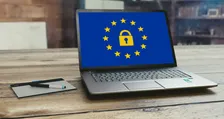
Personalization, privacy and the European GDPR law

The impact of the strict EU privacy laws ("GDPR") on personalization - and "profiling" in particular.

Play

Updated 10 February 2026

Personalization, privacy and the GDPR laws

Video transcript

Hi, I am Sander, CEO at Unless.com.

Today i would like to discuss the legal aspects of privacy when you personalize your website, using Unless or any other personalization service. And take note, this is just a very short video, so this is by no means proper legal advise!

Personalization and privacy are not mutually exclusive. It really depends on how you execute it.

Let's discuss this topic with the European GDPR law in mind. Now that these new privacy laws have kicked in, you could say that the European privacy standards are the strictest on the globe.

The first question you should ask yourself is where your data sits. Make sure to pick a provider that stores your data in a country that abides to the EU laws - the easiest way to do that is to pick one that stores data inside the EU.

Personalization within the GDPR law requires a lawful basis for using "profiling". Under the GDPR law, profiling is more or less defined as any automated processing of personal data to analyse or predict things about that person, like health, preferences, interests, behaviour, location and so on. Typically the stuff you need for personalization.

So, what would be an appropriate lawful basis? You can do two things: ask for explicit consent or have a legitimate interest.

Consent is the easiest one to explain. You just use a consent popup or something, which you probably need to do anyway. Take note: up front consent is required only if the personalization is not part of the normal procedure of your service. Example: creating an account before buying a book on Amazon does not require explicit consent for profiling. Without consent, they may send you messages about the order - but not about “other people liked these books as well”.

On to Legitimate interest. If the interest of the customer is really high, this may trump the consent rule. For example, if I order my meds from an online pharmacy and they know I will run out of meds in 3 months, they can send me a marketing message right before the 3 months are over to tell me this. In this case, legitimate interest counts as a legal basis for processing my data to create this personalized message. However, if I go to the supermarket to buy milk and I have a loyalty card that stores my purchasing history, the supermarket chain would not be able to use the same basis to send me marketing messages reminding me to purchase more milk.” Because milk is not essential to me.

To make things easier, many personalization service providers, like Unless, offer tools that can help you abide all applicable laws. Also, there is an Unless article upcoming, about GDPR specifically.

So... Come to Unless.com and check it out!

We're here to help

Quick responses if you have an issue. Feel free to ask us anything — or ask our conversational AI a question.